Why Choosing the Right Career Matters
Your career is more than just a job—it’s where you’ll spend a huge chunk of your time, energy, and life. According to the U.S. Bureau of Labor Statistics, the average person spends about one-third of their life working—that’s around 90,000 hours! A career that aligns with your passions (what you love) and skills (what you’re good at) can make those hours feel meaningful, exciting, and even fun. On the flip side, picking a career that doesn’t suit you can lead to stress, boredom, or burnout. A 2024 Gallup study found that 60% of workers feel disengaged in jobs that don’t match their interests or strengths. So, choosing wisely can boost your happiness and success.
Let’s dive into how you can find a career that feels like you.
Step 1: Discover Your Passions
Your passion is what gets you excited—it’s the stuff you’d do even if you weren’t paid for it. Maybe you love helping people, creating art, solving puzzles, or exploring new places. Figuring out what you love is the first step to finding a career that feels right.
How to Find Your Passions
- Ask Yourself Questions:
- What activities make you lose track of time?
- If money wasn’t an issue, what would you do every day?
- What topics do you love reading or talking about?
- Try New Things: Sign up for a cooking class, volunteer at a local charity, or watch tutorials on coding. Exploring new activities can spark unexpected passions.
- Reflect on Childhood Dreams: What did you want to be when you were a kid? Those dreams can hint at what still excites you.
Example: Sarah loved animals as a kid and spent hours watching nature shows. She thought about becoming a vet but wasn’t sure about the science classes. After volunteering at an animal shelter, she discovered she was passionate about animal welfare and now works as a fundraiser for a pet rescue organization.
Data Point: A 2023 LinkedIn survey found that 74% of workers who followed their passions reported higher job satisfaction than those who didn’t.
Step 2: Identify Your Skills
Your skills are the things you’re good at—both the ones you’ve learned (like coding or writing) and the natural ones (like being a great listener). Matching your skills to a career means you’ll feel confident and capable in your work.
How to Spot Your Skills
- Take a Skills Quiz: Tools like the Myers-Briggs Type Indicator or SkillsYouNeed Assessment can show what you’re naturally good at, like problem-solving or teamwork.
- Ask Others: Friends, family, or teachers can tell you what you excel at. Maybe you’re the one everyone calls when they need help organizing or fixing something.
- Look at Your Achievements: Think about projects or tasks you’ve nailed. Did you plan a school event? Build a website? Those successes point to your strengths.
Example: Alex was great at explaining things clearly. His friends always asked him to help with their homework. He realized he had a knack for teaching and pursued a career as a corporate trainer, helping employees learn new skills.
Data Point: A 2025 CareerBuilder report showed that 68% of employers value transferable skills (like communication or leadership) over specific degrees when hiring.
Step 3: Match Passions and Skills to Careers
Now that you know what you love and what you’re good at, it’s time to find careers that combine both. This is where the magic happens—when your work feels like an extension of who you are.
How to Match Them
- Make a List: Write down your top passions and skills. For example:
- Passion: Helping people, storytelling
- Skills: Communication, empathy
- Possible Careers: Social worker, journalist, counselor
- Research Careers: Use websites like O*NET Online or CareerOneStop to explore jobs that fit your list. These sites describe what different careers involve, the skills needed, and the pay.
- Talk to Professionals: Reach out to people in jobs you’re curious about. Ask them what a typical day is like and what skills matter most.
Comparison Table: Here’s how passions and skills might match to careers:
| Passion | Skill | Possible Careers | Median Annual Salary (2025) |
|---|---|---|---|
| Helping People | Empathy, Listening | Social Worker, Nurse, Counselor | $50,000–$75,000 (U.S.) |
| Creating Art | Creativity, Design | Graphic Designer, Animator | $55,000–$80,000 (U.S.) |
| Solving Problems | Analytical Thinking | Data Analyst, Engineer | $70,000–$100,000 (U.S.) |
| Technology | Coding, Problem-Solving | Software Developer, IT Specialist | $90,000–$120,000 (U.S.) |
Source: U.S. Bureau of Labor Statistics, 2025 Occupational Outlook Handbook.
Example: Maria loved technology and was great at solving puzzles. She researched careers and found that software development matched her coding skills and her passion for creating new things. She took free online courses on Codecademy and landed an internship that turned into a full-time job.
Step 4: Explore Growing Career Fields
Some career fields are booming, offering more jobs and better pay. Choosing a career in a growing industry can give you more options and security. According to the World Economic Forum’s Future of Jobs Report 2023, here are some hot fields for 2025 and beyond:
- Technology: Jobs like software developers, AI specialists, and cybersecurity analysts are in high demand. Expected job growth: 25% by 2027.
- Healthcare: Nurses, medical assistants, and mental health counselors are needed as populations age. Expected job growth: 15% by 2027.
- Green Energy: Roles like solar panel installers and environmental consultants are growing as the world focuses on sustainability. Expected job growth: 20% by 2027.
- Creative Industries: Content creators, graphic designers, and digital marketers are thriving with the rise of online media. Expected job growth: 10% by 2027.
Solution: Check out these fields if they match your passions and skills. For example, if you love helping the planet and are good at science, a career in green energy could be perfect.
Step 5: Test the Waters
Before committing to a career, try it out! This helps you see if it’s really a good fit without jumping in headfirst.
Ways to Test a Career
- Internships: Work in a company for a few months to see what the job is like. A 2024 NACE survey found that 70% of interns get job offers from their internship companies.
- Volunteering: Help out in a field you’re curious about, like tutoring kids or assisting at a tech startup.
- Shadowing: Spend a day with someone who does the job you want. It’s like a sneak peek into their world.
- Side Projects: Start a small project, like a blog, YouTube channel, or coding app, to practice your skills.
Example: Jamal was curious about marketing but wasn’t sure if it was for him. He volunteered to manage social media for a local charity and loved creating posts. That experience led him to study digital marketing and land a job at an ad agency.
Step 6: Consider Practical Factors
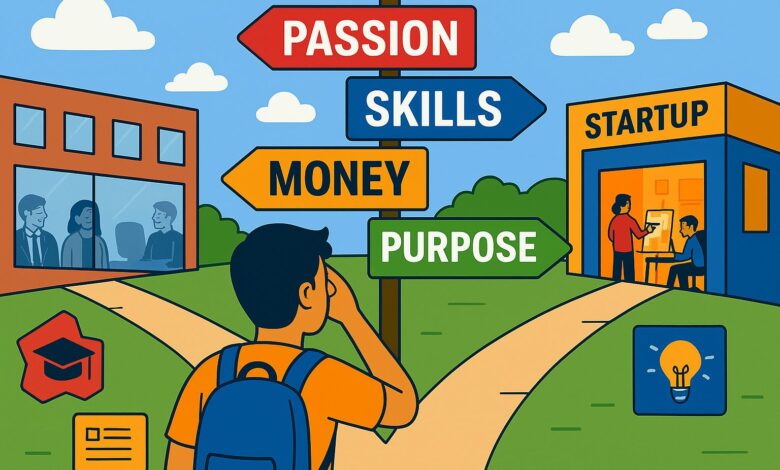
While passion and skills are key, you also need to think about practical stuff like money, job availability, and work-life balance.
- Salary: Does the career pay enough to support your lifestyle? Check salary ranges on sites like Glassdoor or Payscale.
- Job Market: Are there enough jobs in that field? For example, the U.S. Bureau of Labor Statistics predicts software development will grow by 22% from 2020 to 2030, while journalism may see slower growth.
- Location: Can you do the job where you want to live, or will you need to move?
- Work-Life Balance: Does the job let you have time for family, hobbies, or rest? A 2025 Indeed survey found that 65% of workers prioritize balance over high pay.
Solution: Make a pros and cons list for each career you’re considering. Weigh how it fits your passions, skills, and practical needs.
Step 7: Keep Learning and Growing
Careers change over time, so you need to keep learning to stay relevant. A 2025 LinkedIn report says 80% of employers want workers who are eager to learn new skills. This is called “continuous learning,” and it’s a game-changer.
How to Keep Learning
- Online Courses: Platforms like Coursera, Udemy, or Khan Academy offer courses on everything from coding to photography.
- Workshops: Attend local or virtual events to learn from experts.
- Certifications: Get certified in skills like project management (PMP) or digital marketing (Google Analytics).
- Read and Network: Follow industry blogs and connect with professionals on LinkedIn to stay updated.
Example: Priya loved photography but didn’t have a degree in it. She took online courses, built a portfolio, and networked with photographers. Now she runs her own wedding photography business.
What If You’re Still Unsure?
It’s okay to feel stuck! Choosing a career is a big deal, and it’s normal to need time. Here are some extra tips:
- Talk to a Career Counselor: Many schools and universities offer free counseling to help you explore options.
- Take a Gap Year: A year to travel, work, or volunteer can give you clarity. A 2023 study by the Gap Year Association found that 90% of gap year students felt more confident about their career path afterward.
- Start Broad: If you’re torn between passions, pick a flexible career like business or communications that lets you explore multiple interests.
Real Stories: Passion Meets Skills
Let’s look at two people who found careers they love:
- Lila’s Journey: Lila was passionate about food and great at organizing. She started as a chef’s assistant but realized she loved planning events more. She used her skills to become a catering manager, combining her love for food with her knack for logistics.
- Rahul’s Path: Rahul loved video games and was good at problem-solving. He took coding classes, interned at a gaming company, and now designs levels for mobile games—a job that feels like play.
These stories show that when you align passion and skills, work doesn’t feel like work!
Final Thoughts
Choosing a career that matches your passion and skills is like building a puzzle where every piece fits. It starts with knowing what you love and what you’re good at, then exploring careers that bring those together. Use tools like online assessments, talk to people in the field, and test out jobs through internships or projects. Don’t forget practical stuff like pay and job growth, and keep learning to stay ahead.
Your career is a journey, not a race. It’s okay to take your time, try things out, and even change paths later. A 2024 Forbes study found that 50% of workers switch careers at least once, and those who followed their passions were happier in the long run. So, dream big, trust yourself, and take that first step toward a career that feels like you.
What’s your passion? What skills are you proud of? Share in the comments, and let’s talk about your dream career!
Sources: U.S. Bureau of Labor Statistics 2025 Occupational Outlook Handbook, World Economic Forum Future of Jobs Report 2023, LinkedIn 2025 Skills Report, Gallup 2024 Employee Engagement Survey, NACE 2024 Internship Survey, Indeed 2025 Work-Life Balance Report, Gap Year Association 2023 Impact Study, Forbes 2024 Career Change Study.